Introduction
The American Government had evaluated the role of the Airship and seen that it could be used as a multi-role craft. Plans were made, and an agreement was made to construct the Sentinel 5000, a large military airship.

On 5th June 1987, Westinghouse/Airship Industries was awarded a 170 million dollar contract to design an Operational Development Model (ODM) as part of the USN Airship Programme – Defence Advanced Research Project Agency, winning it from Goodyear Aerospace.
Concept and Design

(Thanks to the Howe family archive for this information)
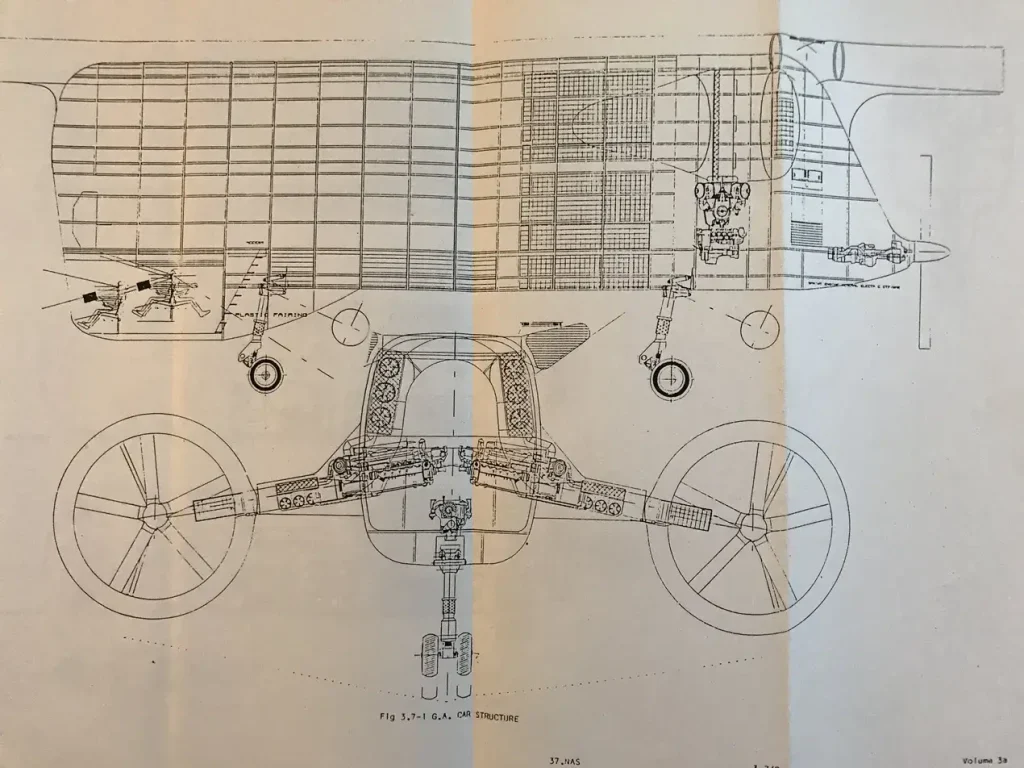
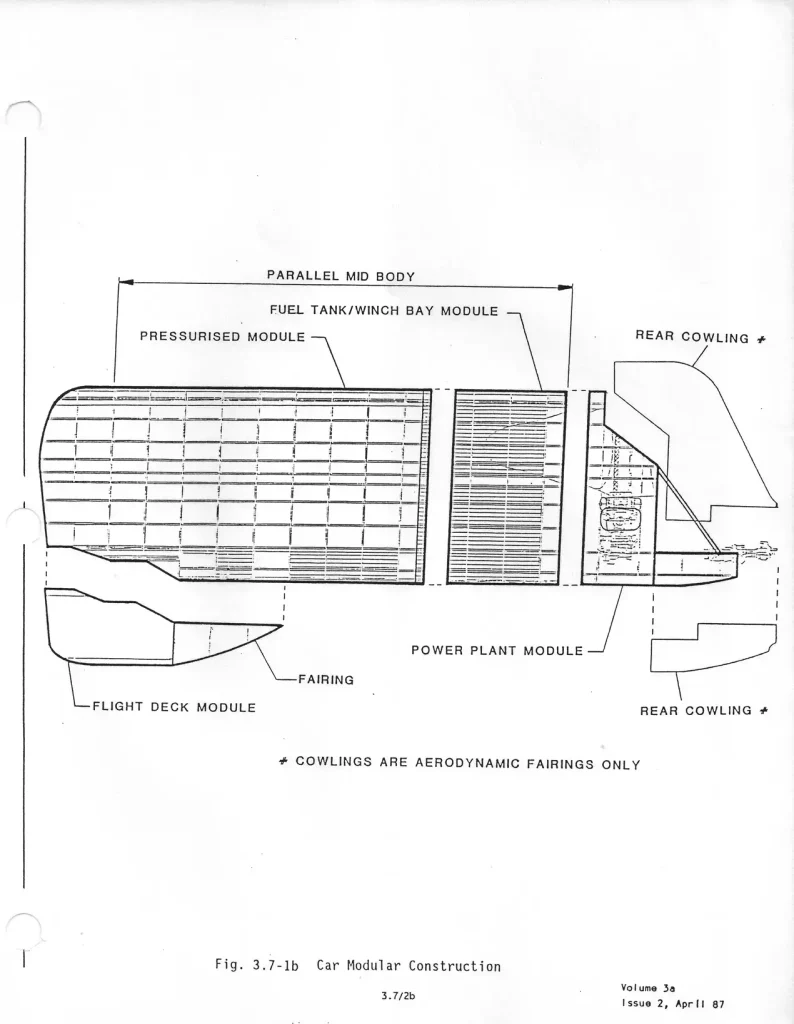
Initial specifications were, of course, to change as with all plans, the contract being for the largest non-rigid airship ever produced. An envelope of over 400ft long compared to the 193ft of the Skyship 600. The Volume is a huge 2,500,000cft (half as much as the R100). The concept was to lift a gondola of some 80 ft long, comprising 3 decks, crew accommodation, operations centre and a flight deck. The gondola was made of a modular construction comprising of 3 modules running fore to aft, forward modules being the pressurised crew compartment, operations and flight controls. A second module was adapted to carry the fuel and a winching system and the third to house the engines, accessible in flight for servicing. A crew of 15 was to run the ship, mostly to operate the surveillance equipment.
The design called for a ceiling of over 10,000ft, and so the command and crew module had to be pressurised. Ferranti Electronics were to design the flight deck avionics, continuing the use of “fly by light” controls as used in the Skyship 600. Fibre optics being used for the low radar signature as the ship as a whole was to virtually be a “stealth” ship constructed of composite materials. The only thing which would betray the ship to other searchers would be its own radar signature.
The ship was required to undertake a standard 3-day endurance cruise at 45 knots ( 55mph). The power units used were to be a pair of lightweight turbocharged 1800hp PPB diesel marine engines developed by CRM of Italy. For sprint speeds, the assistance of a single GET700 1700hp turbo prop engine was to be used to reach a 90 knott (117mph).

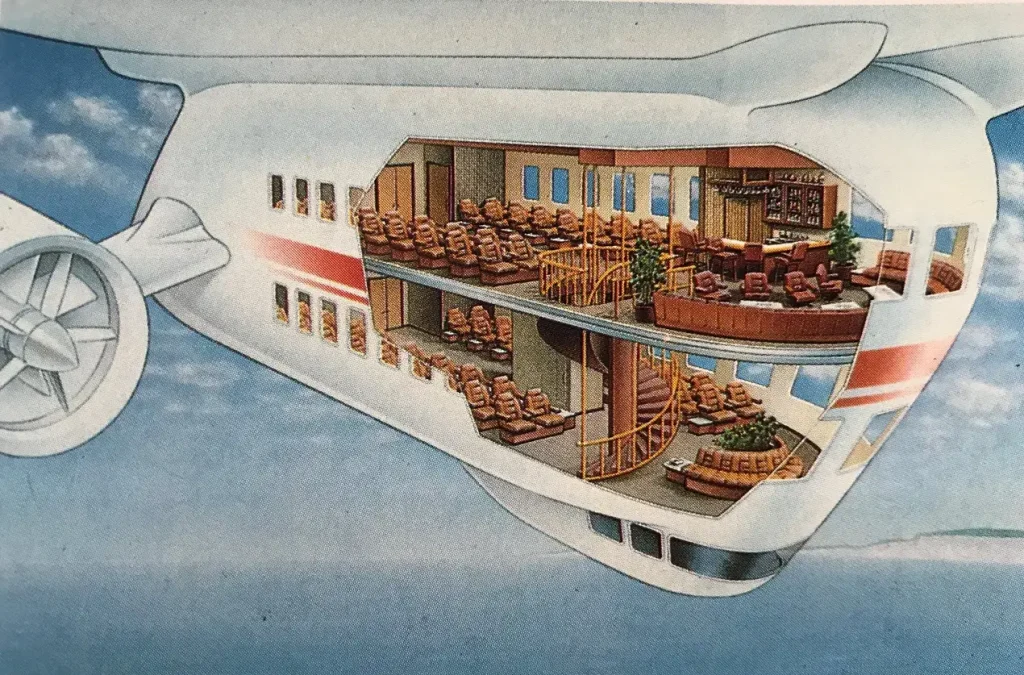
Initially, it was noted that the Sentinel 5000 was to incorporate a E2-C Hawkeye radar suite, complete with an enlarged 40ft rotating antenna in the envelope of the ship. However, this was still undecided as the project continued as to which radar was to be used. It was also agreed that the ship should have the capability of defending itself and should surface or air vessels fail to provide this, then it was proposed that the ship itself should have air-to-air medium and short-range missiles, and decoy mechanisms. The gondola was twin twin-deck gondola, and a flight deck below. The durability and range were not specified; however, the planned layout did incorporate a lounge and exercise area for the crew on long voyages.

The idea was that the military version would be produced first, then a commercial variant, the Skyship 5000 be constructed. The Skyship 5000 was planned to have a 140-seater twin-deck gondola.
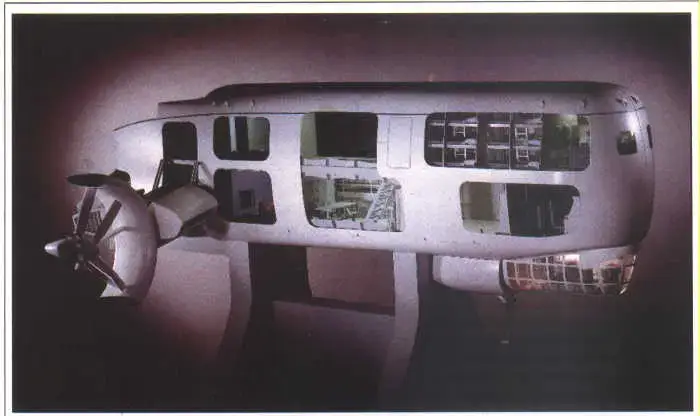
Cabin Scale Mockup
In 1998, a prototype full-scale mock-up was constructed, a gondola ring at Cardington, followed by a full mock-up at Lakehurst, NJ. The plans were that a ship would be flying within 4 years, by 1992. but with the problems of funding and delays in providing the finances, the ship was never put into operation. These delays led to Airship Industries falling into receivership in September 1990.


The commercial viability of the Skyship/ Sentinel 5000 was never proven, as it was the only airship which was planned and almost produced for construction by Airship Industries, yet never flown. Over the 10 years since Airship Industries flew their first ship, the company was nearly to the point of producing the first large-scale airship which had been seen since the R101.