
Introduction
In July 1924, the Airship Guarantee Company sent a detailed proposal to the Secretary of the Australian Government to improve communications between the UK and Australia.
This was followed up in March 1925 by a more detailed proposal titled the Australian Airship Scheme. The Airship Guarantee Company was a subsidiary of the aircraft and submarine manufacturer Vickers and had been set up for the British Government to explore the possibility of using airships for international travel. The company had been contracted to build the R.100 at a fixed price.
The Document

The Australian Airship Scheme document text has been reproduced as follows
Due to the very extensive research which we have been carrying out in connection with the airship which we are now constructing for the British Government, certain advances have recently been made which render this type of vessel even more suitable for both Naval and commercial purposes than we indicated in our former letter on this subject. In the original scheme, the airships which are proposed should be employed on the Australian Route and be capable of flying a non-stop distance of 2,500 miles at a full speed of 70 miles an hour, carrying 120 passengers and 12 tons of luggage, mail and freight. As was then shown, with a ship of this performance, the route to Australia had been divided into the following sections:
The Proposed Routes
- London – Ismaila
- Ismailia – Bombay
- Bombay – Singapore
- Singapore- Perth
Distance 10,200 miles
Due to improved efficiency which we have attained as a result of our recent investigations, the maximum speed of the airship, as determined by wind tunnel experiments carried out for us by the National Physical Laboratory is now 90 miles an hour, an advance which has been made, without any sacrifice of, but rather with an increase in passenger capacity.
As a result of this improvement, longer non-stop flights can be made, with the consequence that the following more direct route to Australia can now be employed:
- London- Baghdad
- Bagdad – Columbo
- Columbo – Perth
Distance 9,110 miles

The Airship Proposal
Thus, not only is the total distance to be flown reduced, but also the capital and maintenance costs of one mooring mast station are eliminated. The improvements which have made the above a route practical proposition are, in the main, the following
- Reduction of the number of engine cars from seven to four. This reduces the head resistance of the ship, while, by using larger engine units, the total power is increased to 4,400 H.P.
- Placing the Control Room of the airship in the bow of the vessel. This eliminates resistance at a point where its presence would be subjective.
To appreciate these improvements at a glance, it is but necessary to examine the Air Ministry’s design for an airship of the same volume, namely 5,000,000 cubic feet, and then compare this with our final design.
Fig. 1 shows the Air Ministry vessel with its seven cars (three on either side and one in the centre line aft) and control and passenger quarters protruding from the streamlined form of the hull;
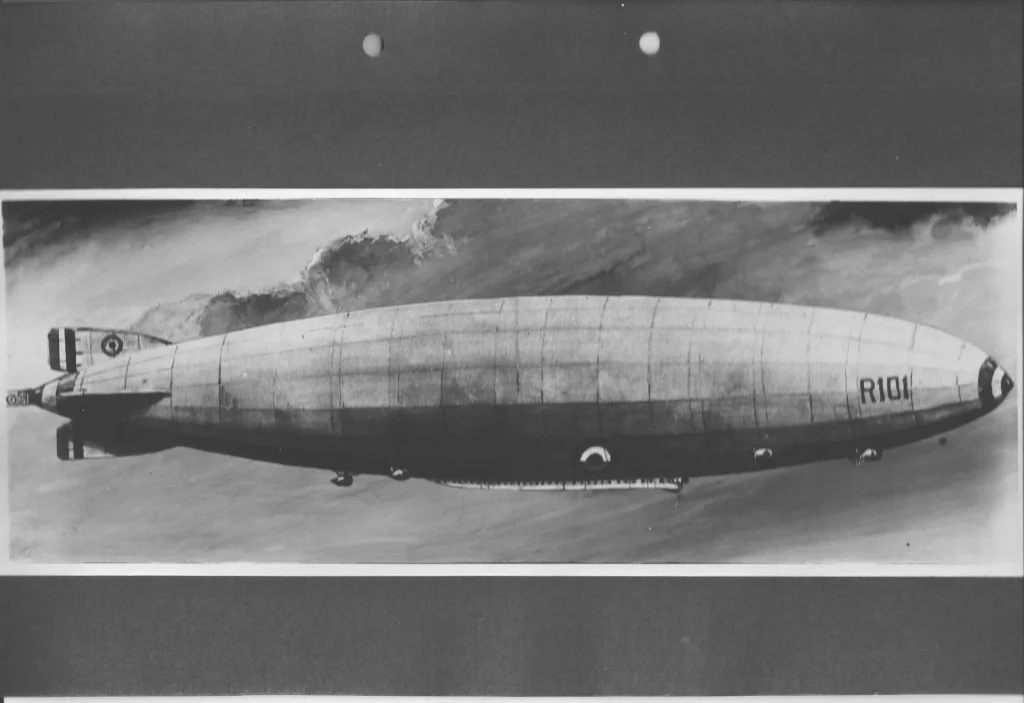
Fig II is a reproduction from a drawing illustrating the final form of this Company’s ship; there are but four engine cars, (two on either side) while the head resistance of the control and passenger quarters has been entirely eliminated by an arrangement which can be seen in greater detail in Fig III.


It is interesting to note that the “lower lookout position” is also stated as a “bomb sight” position, giving the suggestion that the civilian airship could be used for military purposes if required.