Despite the problems in 1911 with HMA No. 1 “Mayfly”, a decision was made in 1913 to continue to invest in rigid airships.
Plans for a new Airship
Designated HMA No. 9, a new ship was planned, but when war broke out on 4th August 1914, this put a delay on further design and construction of the ship.
The original plans for the second rigid Airship had been agreed between the Admiralty and the Government. However, this was a time of turmoil in that the political situation in Europe had darkened, and also, there were quarrels within the Government as to whether a replacement for HMA No. 1 would be required. The non-rigid programme was proving to be more successful than the rigid one at this stage. With the Dardanelle fiasco already making the situation in Europe more uncertain, a conference was called with the Admiralty on June 19th, 191,2, to consider the programme again.
At this meeting, it was not only agreed to expand the non-rigid programme, but also to recommence Airship HMA No. 9. It was agreed that Vickers should be asked to design an improved class of ship incorporating all that was then known about the Zeppelins. There was only one restriction with this order, which was that the proposed classes would have to be built in existing facilities. This meant that the ship would have to be limited to the size of the Zeppelins on their cradles in Germany. The reason behind this decision was that the technology was based on the German Army Zeppelin Z IV, which accidentally landed in France on 3rd April 1913. Her design was already 3 years old, but there was little else to go on except the information on what the designers in Germany had planned. It must not be forgotten that some of the refinements made were better than those of contemporary Zeppelins.
Design and Construction

Vickers had disbanded its airship department after the failure of the government to keep it supplied with work following the Mayfly project. A new department was therefore constituted in April 1913. They reassembled its original design team, including H. B. Pratt and the young Barnes Wallis. Design work started on the No. 9 in April 1913. Work proceeded slowly at first as specifications were required to follow the Zeppelin lines.
The original order for the new rigid airship was placed on June 10th 1913, with final plans agreed at the end of the year, and a formal contract signed in March 1914.
New Shed
Construction was delayed because the old shed at Cavendish Dock, Barrow-in-Furness, was much too small, and a new one had to be erected. This was completed at Walney Island, a flat area of land just off the west of Barrow-in-Furness. The new shed had internal clearances of 450 feet long, 150 feet wide and 98 feet high. It also incorporated an innovation, having a 6-inch concrete floor with handling rails embedded in it that extended some 450 feet out into the adjacent field. Also new were the eight fire extinguishing jets linked to a special reservoir to deal with the possibility of fire. A gasbag factory with 100 employees was set up beside the shed.
The workmen were gathered, and when war broke out, HMA No. 9 was nearly ready for erection. Work on the ship continued during the first months of the war despite the demand for materials and manpower for the war effort. More concerns were expressed at the Admiralty, and on March 12th 1915, the First Lord of the Admiralty, Winston Churchill, cancelled the order for the ship. It was said that the reasons behind this decision were that it was expected that the war would be finished in 1915 and the vessel would not be operational by the,n and thus was a waste of valuable resources. However, history proved otherwise; the war continued, and work was recommenced on the ship with the order reinstated in June 1915.
Final erection of the ship began in the Autumn of 1915, but the ship wasn’t completed until 28th June 1916. There were problems in obtaining the nets for the gasbags as the flax was coming in from Ireland when the Irish rebellion broke out, and delivery of the materials was delayed.
First Flight
On November 16th 1916, HMA No. 9 left her shed and was moored outside for final shakedown and checking of the fittings and engines.

With four engines mounted in pairs on each of the two external gondolas, and mounted on massive extension shafts, the designers of HMA No. 9 had added the useful adaptation of swivelling propellers to assist in takeoff and landing; an example of vectored thrust on an aircraft as early as 1916. This was an idea which was later used to full effect by the Airship Industries Skyship series in the 1980s.


There was a problem in that she was unable to lift her contract weight of 3.1 tons, and so she was lightened by the removal of the rear two engines, replacing them with a single engine that had been recovered from the crashed L33. After this, she was able to carry a disposable lift of 3.8 tons, better than that originally specified.
The first test flight was on 27th November 1916, the first time a British Rigid airship had taken flight.

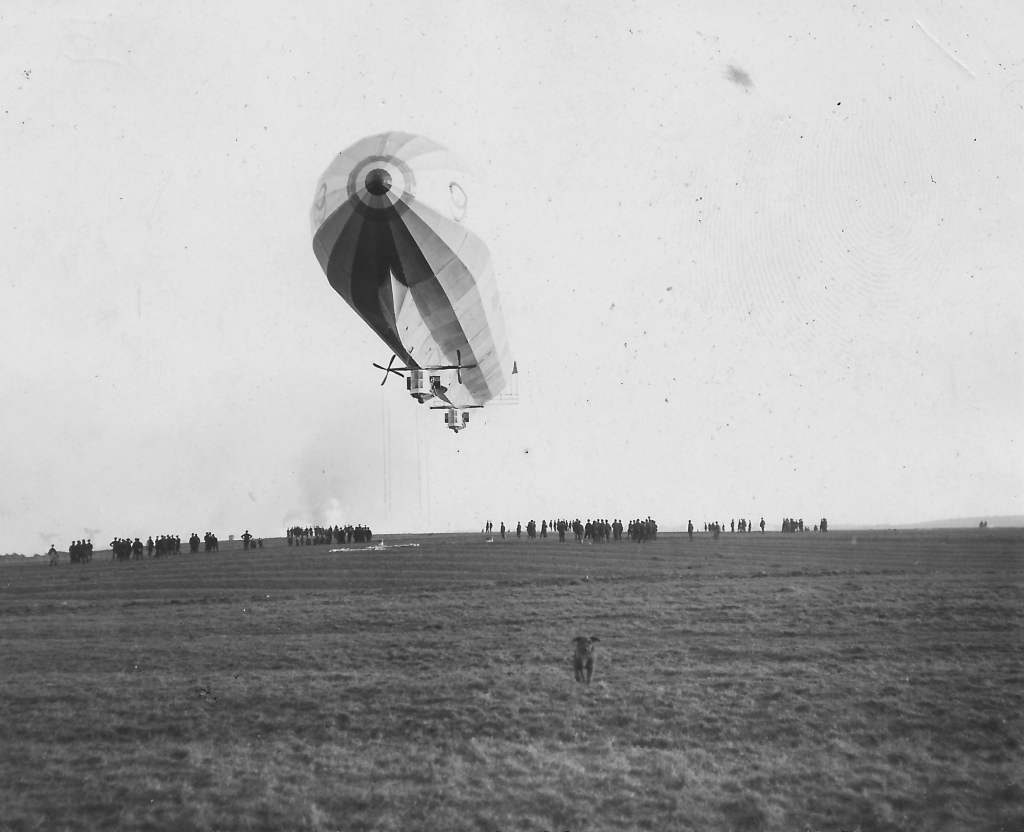

HMA No. 9 was built much stronger than her contemporary German airships. This was because the Admiralty had insisted that she would have to be handled by novice crews until some officers and men gained experience with rigid airships. The ship was also designed, like the Mayfly, with watertight cars.
Service Life
After a series of test flights, she left the Vickers facility at Barrow and flew to Howden, where she underwent trials. Most of her life was spent in experimental mooring and handling tests, as she was still classed as an experimental ship, as were the first Zeppelins.

From October 17th 1917, to June 1918, she resided at Pulham Air Station in Norfolk, where she was finally dismantled due to demand for shed space to allow construction of newer ships.
HMA No. 9 spent 198 hours and 16 minutes in the air, of which some 33 hours were at mast.
It must not be forgotten that HMA No. 9 was the first British rigid airship to fly, and the success of the design, thought unable to compete against contemporary Zeppelins of the time, proved that the British Admiralty had a successful prototype. They now also had experience of handling a rigid airship and mooring masts, which were to evolve into a unique method of mooring ships.
Recycling.. a new idea?
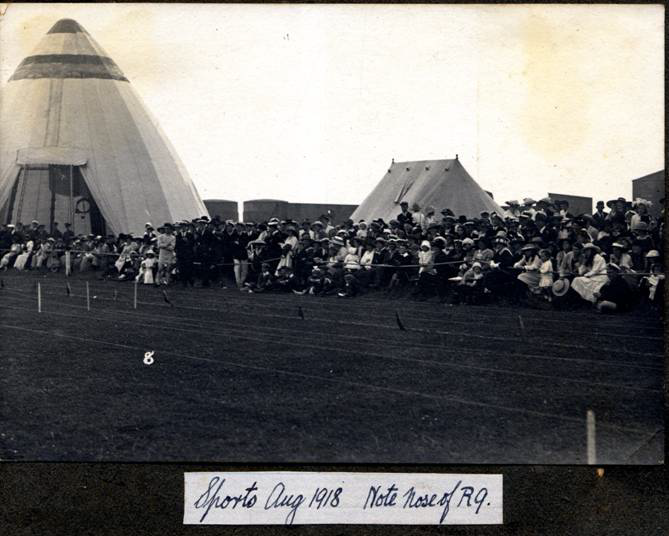
Despite recycling being a new concept, back in 1918 the staff and directors knew better, as when the H.M.A 9 was being dismantled in 1918, you can see from the picture to the left that the nosecone was kept, and used as a marquee (perfect being light weight, strong and waterproof ) during the Pulham Air station sports day event.