
Origins of the NT
The idea for a new Zeppelin airship emerged in the late 1980s as part of studies on commercial potential. In September 1993, Zeppelin Luftschifftechnik GmbH (ZLT) was founded specifically to develop, manufacture, and market a new generation of airships rooted in Zeppelin tradition but incorporating contemporary materials and flight systems.
The Zeppelin NT (NT defined as New Technology) was developed by Zeppelin Luftschifftechnik GmbH (ZLT), a company founded in 1993 in Friedrichshafen, Germany, specifically to revive Zeppelin-type airships with modern technology. ZLT considers itself a successor to the original Luftschiffbau Zeppelin of the early 20th century.
The design combined a semi-rigid internal triangular frame, made of carbon-fibre and aluminium, with a helium-filled envelope. This structure enabled better manoeuvrability, vertical take-off and precise flight control.
Initial scale model tests were undertaken in 1994 with an inflated transparent model to show the framework and the newly developed three-fin tail configuration.

Construction of the first prototype began in 1995.
1996 Design Change — Lengthening the Hull
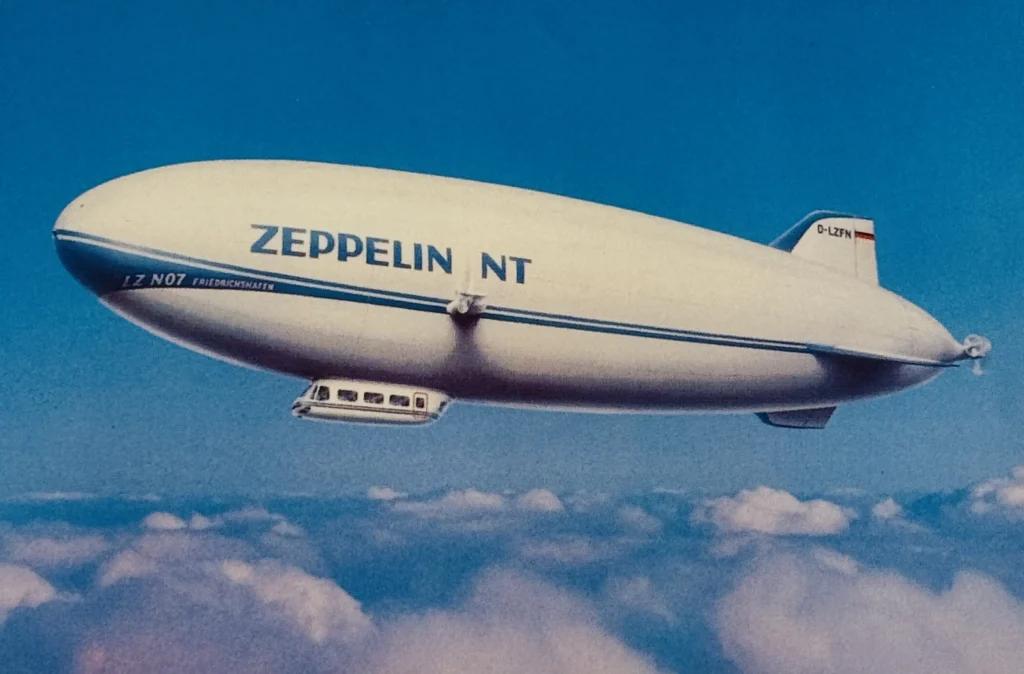

During development, engineers discovered a miscalculation in the original design: the planned ~65 m length airship did not have enough helium volume (lift) for the expected payload and fuel reserves. In 1996, the Zeppelin NT was extended to about 75 m in length, increasing its gas volume from 7 200 m³ to 8 200 m³ to meet performance and payload requirements.
Design Philosophy and Key Concepts
Semi-Rigid Structure
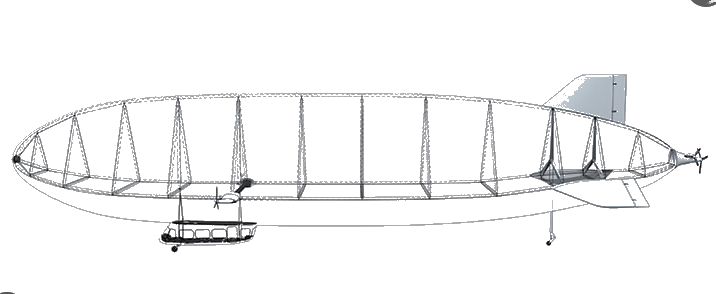
At the heart of the Zeppelin NT’s design is a hybrid structural concept: a rigid internal framework of carbon fibre and aluminium provides the main load-bearing capability, while a laminated outer envelope filled with helium maintains shape and lift. This approach delivers the structural stability of rigid airships with weight savings and simplicity closer to non-rigid airships.
- Internal framework: 12 triangular carbon fibre frames braced with aramid cables and three longitudinal aluminium girders. All major components (gondola, tail surfaces, propulsion) attach directly to this frame.
- Envelope & ballonets: Multi-layer high-strength laminate filled with helium, with internal ballonets keeping pressure constant through altitude changes.
Propulsion & Maneuverability

It was decided that the Zeppelin NT airships would be powered by three piston engines (Lycoming IO-360 series) driving vectored thrust propellers that can tilt during flight. This system enables:
- Vertical take-off and landing (VTOL) capability.
- Stationary hover, backward flight, and precision positioning.
- Efficient cruise performance up to ~125 km/h (approx. 78 mph).
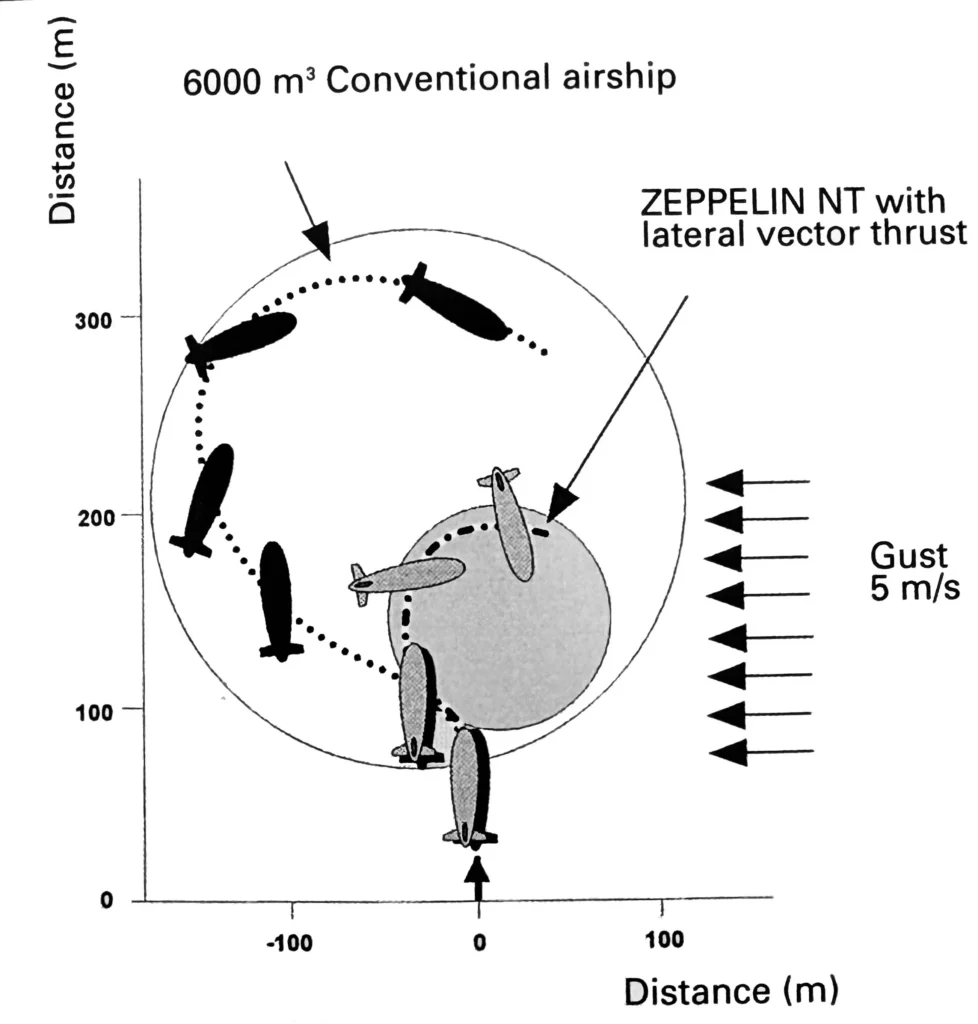
Excellent manoeuvrability is ensured by the provision of two side-mounted vectored-thrust propulsion units. A stern-mounted propulsion unit capable of delivering lateral thrust together with vectored/ horizontal thrust provides the pitch and yaw controls. The arrangement substantially reduces the effects of lateral gusts during a slow approach, ensuring a controlled, accurate landing and obviating the need for a larger number of ground crew.
Avionics & Flight Control
The Zeppelin NT incorporates modern avionics and fly-by-wire controls that make the NT responsive and capable of precision flight. Pilots operate via sidestick interfaces, with integrated navigation, communication, and safety systems.
Cabin & Operations
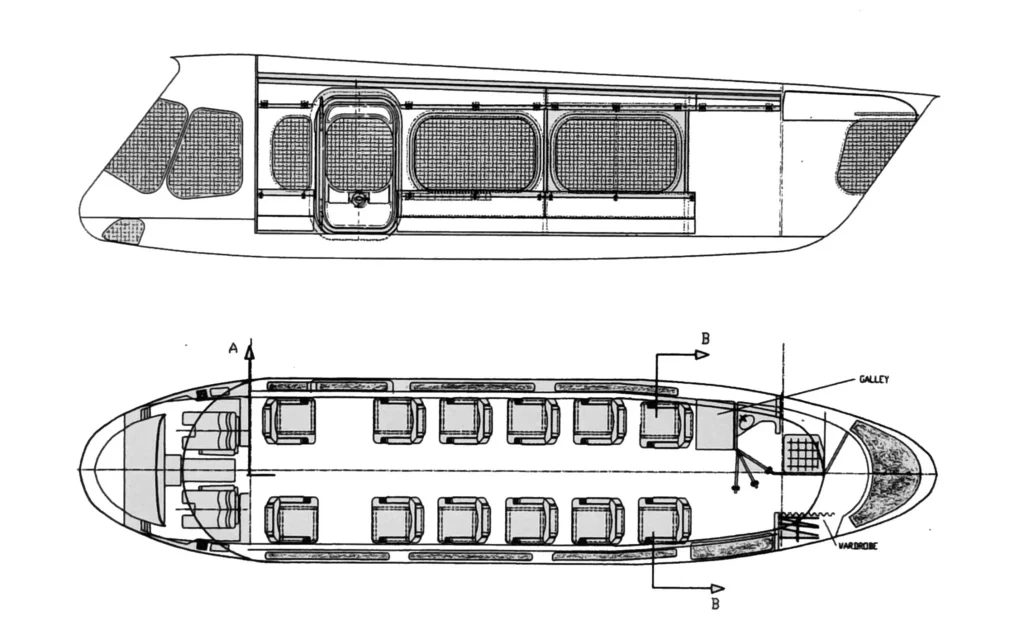
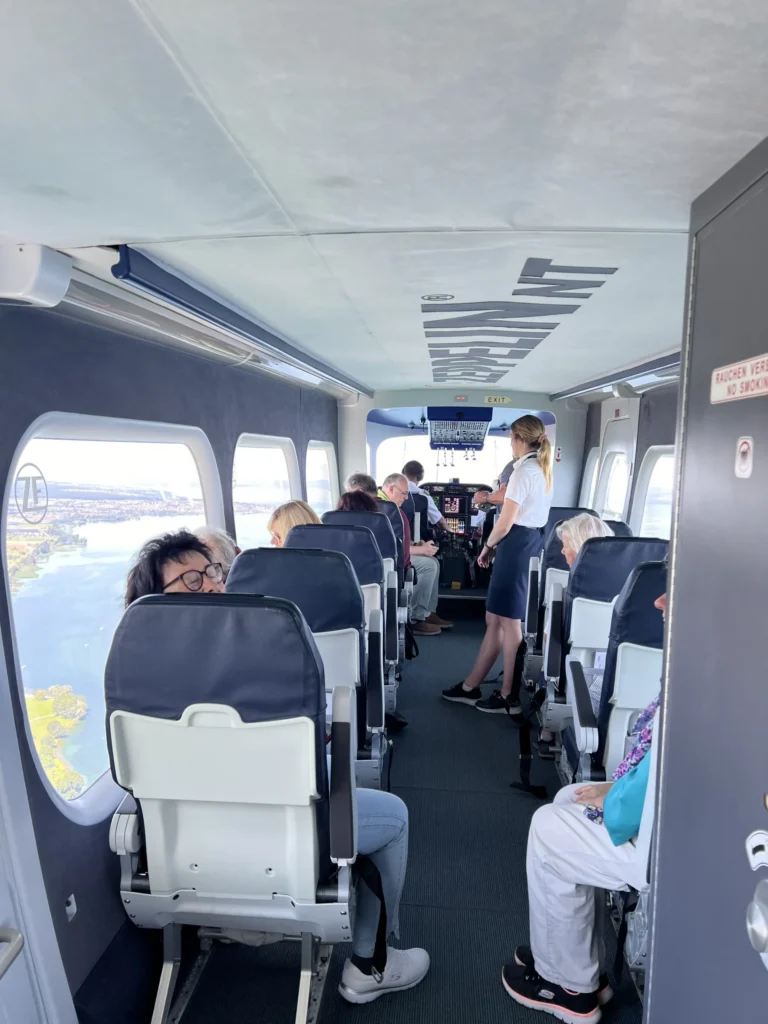
The gondola accommodates up to 12–14 passengers plus 2 pilots, depending on configuration, with flexible interiors for tourist flights, scientific payloads, or advertising work. Only a small ground crew (typically three people) is required for landing or mooring.
First Flight
The Zeppelin NT made its maiden flight on 18 September 1997 from Friedrichshafen, Germany — marking the first Zeppelin family airship flight in more than half a century. The 40-minute flight was piloted by US airship pilot Scott Danneker.
Development & Production History
Series Production

Series production began in the early 2000s. The base model, originally designated LZ N07-100, evolved into improved LZ N07-101 variants with updated avionics. By the mid-2010s, production included seven Zeppelin NT airships across multiple operators.
The NT was certified for commercial passenger operations in Europe and later in the United States, opening the door to tourism, advertising, environmental research, and special missions.
Fleet Overview
Prototype & Early Fleet
- D-LZFN ‘Friedrichshafen’ (SN 01): First prototype, served promotional, training, and experimental roles in Germany and abroad. Later involved in scientific projects (e.g., airborne geophysical surveys). It was irreparably damaged in a severe wind storm in Botswana in September 2007 while moored and was subsequently retired.
- D-LZZR / JA101Z ‘Bodensee’ (SN 02): First series-built NT (entered service 2001). Sold to Japan in 2004 for commercial operations; returned to Germany in 2010 after the Japanese operator ceased activities. Rebuilt to the -101 standard in 2015 and resumed passenger operations with Deutsche Zeppelin Reederei (DZR).

Other series NTs have operated from Friedrichshafen and other European bases, performing sightseeing flights over Lake Constance and environmental missions.
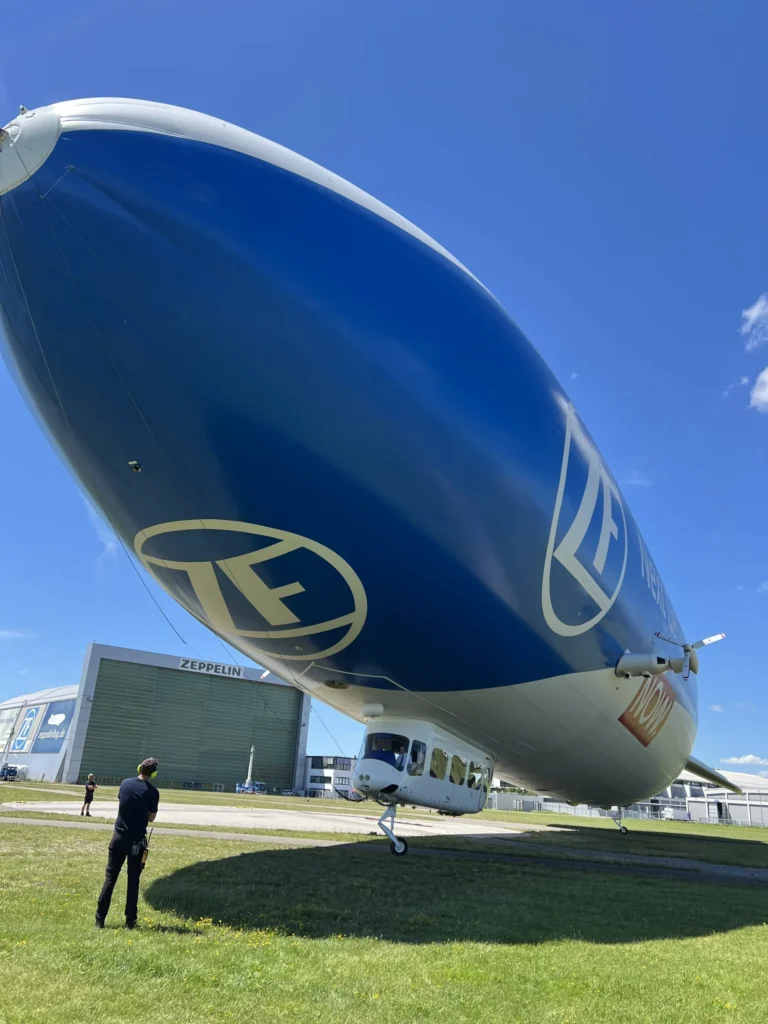



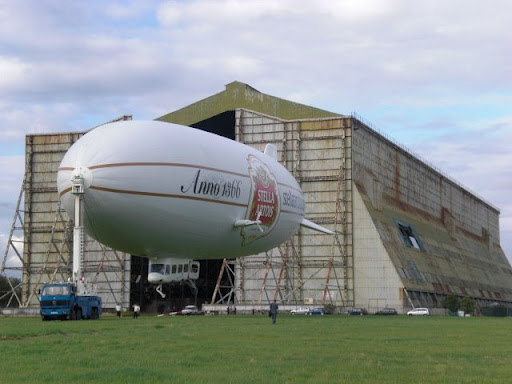
As part of a European tour, in 2008 the Zeppelin NT was briefly based at Cardington whilst undertaking a UK tour. The first visit of a Zeppelin airship since the visit of the Graf Zeppelin in 1930.
Goodyear Zeppelin Fleet (USA)
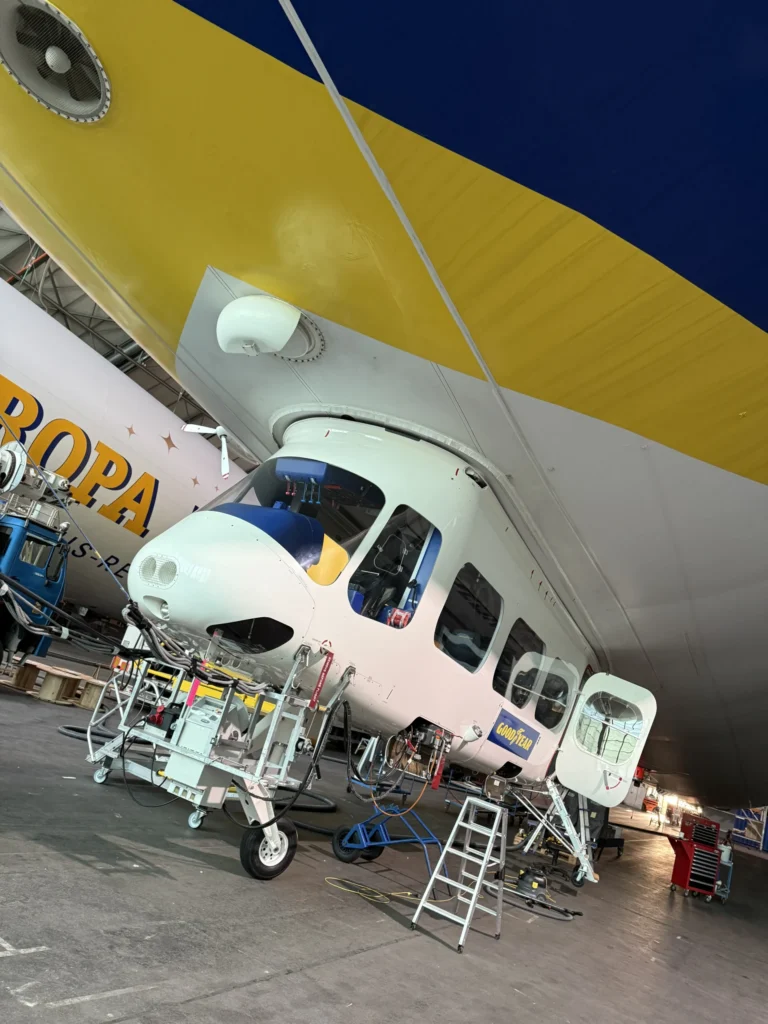
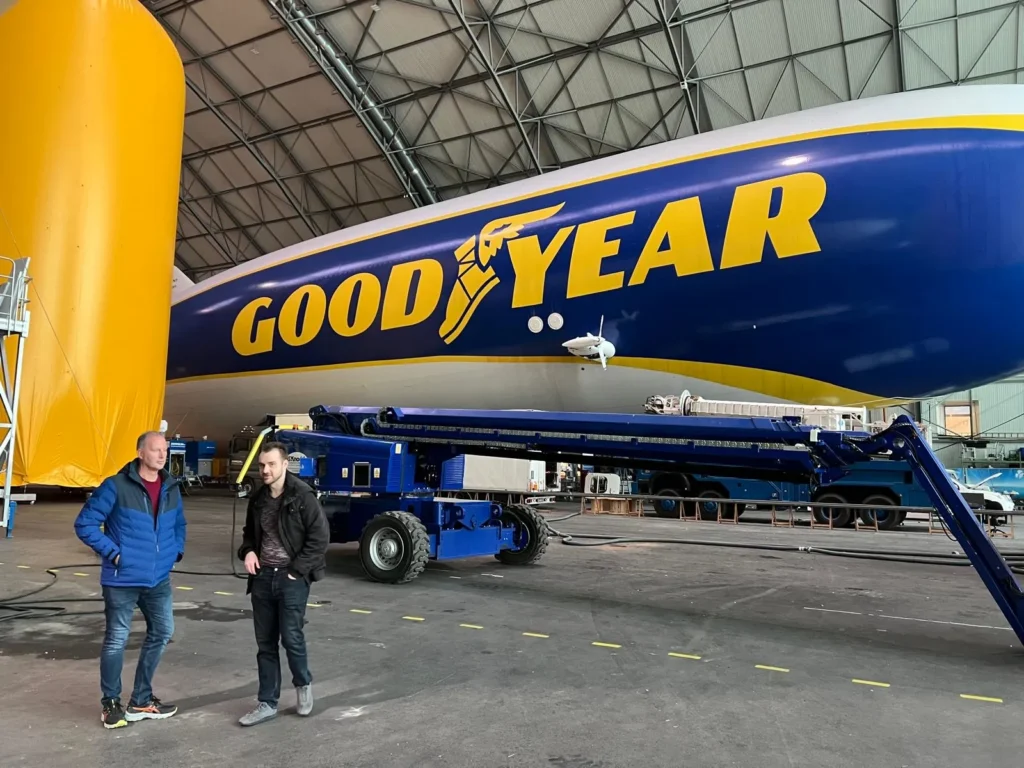

In 2011, Goodyear, long known for its aerial advertising blimps, placed an order for three Zeppelin NT LZ N07-101 airships to replace its older non-rigid GZ-20 fleet. These entered service in 2014, 2016, and 2018:
- Wingfoot One — First delivered, operated from Wingfoot Lake, Ohio.
- Wingfoot Two — Served from Pompano Beach, Florida.
- Wingfoot Three — Completed the U.S. fleet, operating from Goodyear Blimp Base, Carson, California.
All three fly over major events and cities in the U.S., often still marketed as “Goodyear blimps” despite being Zeppelin NT semi-rigid airships.
A Goodyear-liveried NT has been seen over sporting events in Europe, being operated out of the Essen Mulheim base in northern Germany. In the summer of 2026, the Zeppelin NT came to the UK and undertook a series of advertising flights over UK sporting events whilst based at Damyns Hall Aerodrome in Essex.

Operational Roles
Across Europe, Japan, the U.S., and Africa, Zeppelin NTs have performed:
- Tourist and sightseeing flights.
- Aerial advertising and promotional displays.
- Scientific and environmental research missions (e.g., atmospheric studies).
- Observation and photography platforms.
The Zeppelin NT bridges historical legacy and modern aerospace engineering. Through a semi-rigid structure, vectored thrust propulsion, and contemporary avionics, this class delivers a stable, quiet, and flexible flight platform. From tourism over Lake Constance to aerial advertising over U.S. cities, the Zeppelin NT fleet demonstrates the enduring relevance of lighter-than-air technology in the 21st century — while maintaining a clean operational safety profile distinct from the tragedies of the hydrogen era.
Timeline Chart — Zeppelin NT
| Year | Event / Milestone | Aircraft / Notes |
|---|---|---|
| 1989 | Initial design studies begin for a new airship. | Concept stage. |
| 1993 | Zeppelin Luftschifftechnik GmbH founded to develop the NT. | — |
| 1995 | Prototype (SN-01) construction begins. | — |
| 1996 | Hull extended from ~65 m to ~75 m after performance review. | Hull extended from ~65 m to ~75 m after the performance review. |
| 18 Sep 1997 | Maiden flight of prototype in Friedrichshafen. | D-LZFN (SN-01) |
| 2000 | Prototype officially christened Friedrichshafen. | |
| 15 Aug 2001 | First commercial flights begin. | D-LZZR Bodensee (SN-02) |
| Feb 2003 | Second production NT enters service. | D-LZZF Baden-Württemberg (SN-03) |
| 20 Sep 2007 | First prototype was severely damaged on the ground (storm damage). | D-LZFN SN-01 destroyed |
| 21 May 2008 | Fourth production airship enters service. | D-LZNT Eureka (SN-04) |
| 2011–12 | Goodyear orders 3 NTs for its fleet. | — |
| 14 Mar 2014 | Wingfoot One maiden flight (Goodyear). | Goodyear NT LZ N07-101 |
| 12 Mar 2016 | Wingfoot Two first flight. | Goodyear NT LZ N07-101 |
| 25 Jun 2018 | Wingfoot Three delivered. | Goodyear NT LZ N07-101 |
| 2024–25 | New NTs named and stationed in Germany. | E.g., Hugo Eckener (2024), new unit (2025) |
Fleet-by-Fleet Summary
🇩🇪 Deutsche Zeppelin-Reederei (DZR) — Passenger & Sightseeing
| Aircraft | Registration | Role / Notes |
|---|---|---|
| Friedrichshafen | D-LZFN (SN-01) | Prototype; used for demos & training; destroyed 2007 and later replaced. |
| Bodensee | D-LZZR (SN-02) | First production; commercial sightseeing started 2001; sold to Japan 2004, returned to Germany 2010, rebuilt to larger capacity. |
| Baden-Württemberg | D-LZZF (SN-03) | Second production; mainstay of early German passenger flights from 2003. |
| Additional German NTs (2024-25) | New units | Newer aircraft stationed at Essen/Mülheim and Friedrichshafen, named Hugo Eckener. |
Operators & Countries: Germany remains the central operating base; earlier operations included flights in Japan and the United States.
Nippon Airship Corporation — Japanese Service
| Aircraft | Registration | Notes |
|---|---|---|
| Bodensee | D-LZZR | Operated in Japan from 2004; returned to Germany due to economic issues around 2010. |
Airship Ventures — California Sightseeing
| Aircraft | Registration | Notes |
|---|---|---|
| Eureka | D-LZNT (SN-04) | Entered service 2008 for “flightseeing” in the San Francisco Bay Area; grounded when Airship Ventures ceased operations 2012. |
Goodyear Fleet — Advertising & Observation
Goodyear replaced its traditional non-rigid blimps with three Zeppelin NT LZ N07-101 airships:
| Aircraft | Name | Role |
|---|---|---|
| N1A | Wingfoot One | Advertising, event coverage; based in Florida. |
| N2A | Wingfoot Two | Same role; based in California. |
| N3A | Wingfoot Three | Same role; based in Ohio. |
These are often called Goodyear Blimps, even though they are technically semi-rigid airships built by ZLT.
Passenger Carried Totals (Highlights)
- Over 100,000 passengers had flown on DZR flights by 2010 — less than a decade after commercial service began.
- By 2011, DZR reported over 117 500 passengers carried on sightseeing flights.
- Additional riders flew Zeppelin NTs in Japan and on Airship Ventures flights in the U.S. (tens of thousands).
- Goodyear NTs are primarily advertising/observation platforms rather than passenger carriers.
Exact updated totals across all operators aren’t published publicly, but several hundred thousand passengers have flown these airships since 2001.