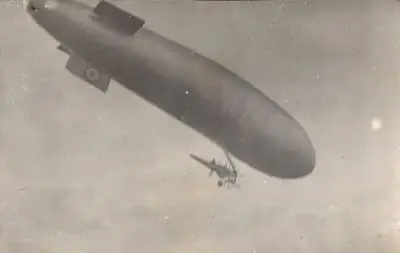
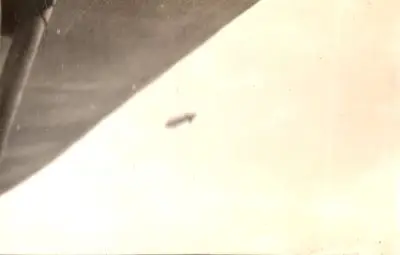
To safeguard the shipping lanes in the Irish Sea and the links to one of Britain’s major port hub, Liverpool, it was decided that two RNAS airship stations should be based in Wales.
Location
The first base was situated on the Isle of Anglesey, some 12 miles south east of Holyhead, and 8 miles north west of Cananavron.

The site chosen for the future RNAS Anglesey was an area some 5 miles inland from the coast, providing protection from the coastal winds, on the island. The farmland was closed, being low-lying ground, surrounded by gently undulating hills. The airship base was sited just off the old A5 road, which was a historic link between Holyhead and London. It meant that the station itself was well-positioned to receive construction materials and supplies. For rail links and the delivery of heavier goods and materials for the airship shed and plant, the site was close to the branch line to Amlwch, which itself was linked to the mainline to Holyhead.
On 26th September 1915 base was commissioned with the construction of the Submarine Scout class shed, which was partly completed.
The first commander of the base was Major George Herbert Scott, the later Commander of the R34, and Deputy Director of Airship Development for the Imperial Airship Scheme.
Role
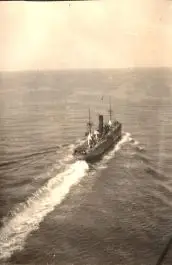
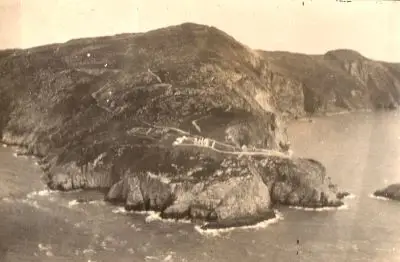
The key role of the RNAS airships was to patrol the central Irish Sea shipping. The mail and passenger ships from Holyhead to Dublin, the services to the Isle of Man, and of course the large number of freight shipping which rounded the Anglesey Island headland, into the River Mersey, and Liverpool docks.
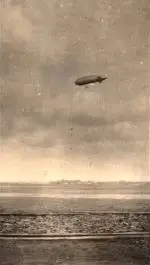
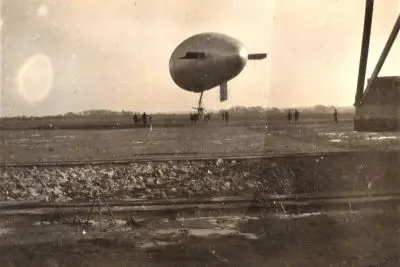
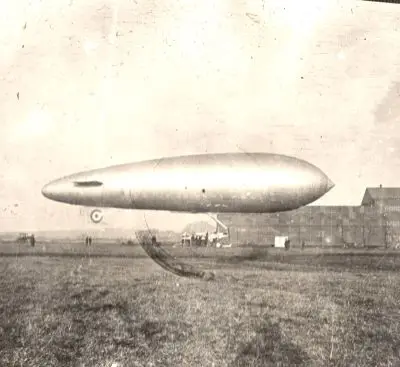
September 1915 saw the arrival of the first airship, the Submarine Scout S.S.18. The airship components arrived by train and were assembled and inflated in the new shed. The first flight of the ship was on 26th September 1915. Three more submarine scout ships arrived over the next few months, the S.S.22, S.S.24 and S.S.25.

When the ships arrived, the crews noted that the rest of the base was still under construction in the later months of 1915 and early 1916. As the silcol plant had not been completed, the ships based there had to be topped up and inflated using hydrogen gas cylinders. The shed was finally completed in February 1916, and protected by four windbreaks, one at each corner of the two sets of shed doors.
Target Practice
As part of the training for the crews, they practised bombing from the ships by dropping unarmed bombs on a dummy target, arranged as the same size and shape of an enemy submarine, which was set up on the landing ground. The bombs used were 16lb bombs, which would make a sound but not cause any damage to the ground.
The convoys leaving Liverpool were protected from leaving the mouth of the River Mersey, then halfway down the Irish Sea. Responsibility of the convoy would then be passed on to the SS ships operating from the South Wales RNAS base at Pembroke.
Enemy activity in the form of submarines was often spotted by the SS ships during the war, and provided valuable service in informing the convoy and Royal Navy ships, and often engaging the submarines by attempting to bomb them.


RNAS Anglesey remained on duty and operational even after the Armistice in November 1918. The reason was to act as minesweepers and mine spotters for an enemy mines which may still have been laid in the Irish Sea shipping lanes.
As with many of the RNAS airship stations which were set up just prior to the First World War, it was decided that the threat of submarines had passed, and therefore the Anglesey base and airships were no longer needed. The ships based at the stations were deflated. The station was finally closed in October 1919. The Government Disposal Board was handed the responsibility of disposing of the buildings and sheds.
Anglesey County Council agreed to purchase some of the buildings which had been built on the site, and was converted in to a small local hospital. The Submarine Scout shed was demolished.
Today
The land where the station was sited was used in World War Two as the site for RAF Mona airfield, and remains as sited there today.
Life at the airship station
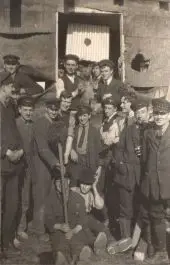
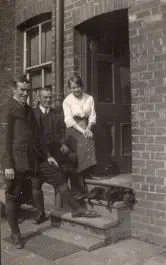
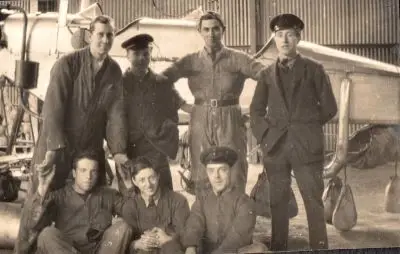
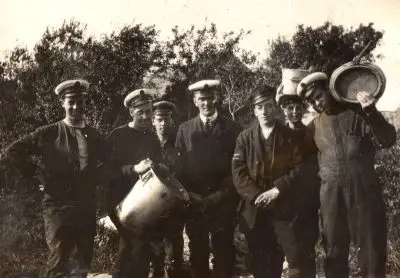
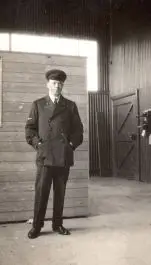
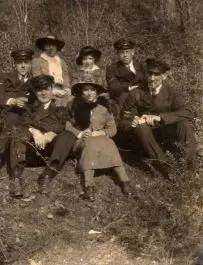
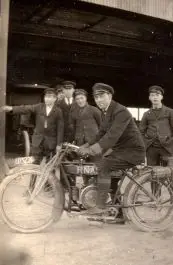
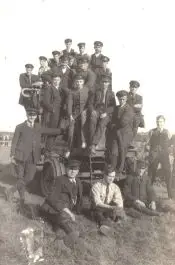
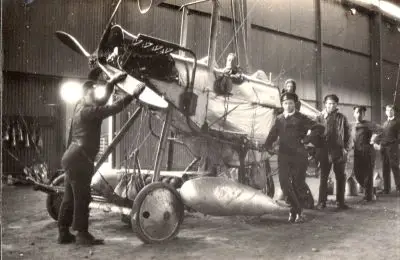
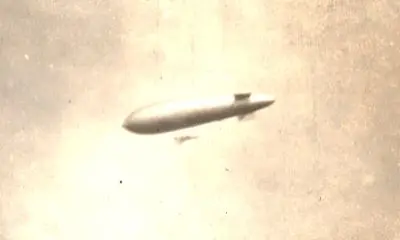
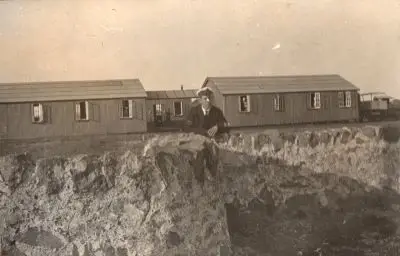
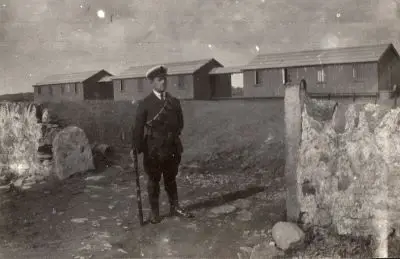
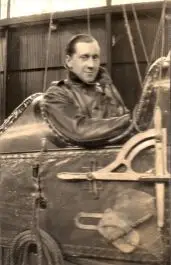
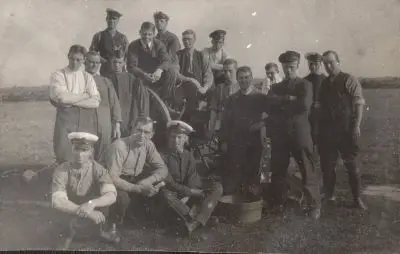
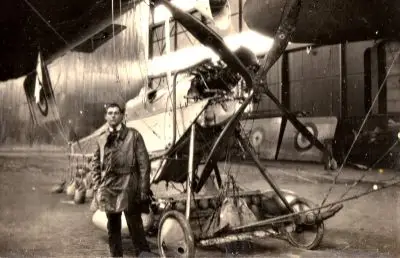
Thanks to Neil Curtis, who provided the following photographs of life at RNAS Anglesey, which were taken by his Grandfather, Harold John Curtis, who was a pilot based at RNAS Anglesey. The pictures give a wonderful insight into daily life for the crews, pilots, officers and workers at the station, both at work and at play.