
In November 1915, in the mid-point of the First World War, the Lord Commissioners of the Admiralty decided that the Air Department should centralise its pilot, airship crew, and balloonist training programmes combined into a single establishment.
Prior to this date, all training and instruction had been split across various RNAS sites across the country. Because of this decentralised approach, the results were often varied and didn’t produce the number of pilots required.
Location
Prior to the war, the site had been extensively surveyed and chosen for it’s accessibility to London and many other parts of England. A branch line was laid from the mainline at Sleaford, some 5 miles away, and used to move construction materials to the site.
The line was laid so quickly that the sleepers were laid directly on the ground. The first trains were running to the site, by early March 1916. The tracks were later re-laid properly, and a passenger station was opened in the heart of RNAS Cranwell.
Construction of the accommodation huts and the aerodrome started in December 1915, although severe weather hindered progress. The first plane landed in January 1916, and the station was officially commissioned in March 1916.
Shed Construction
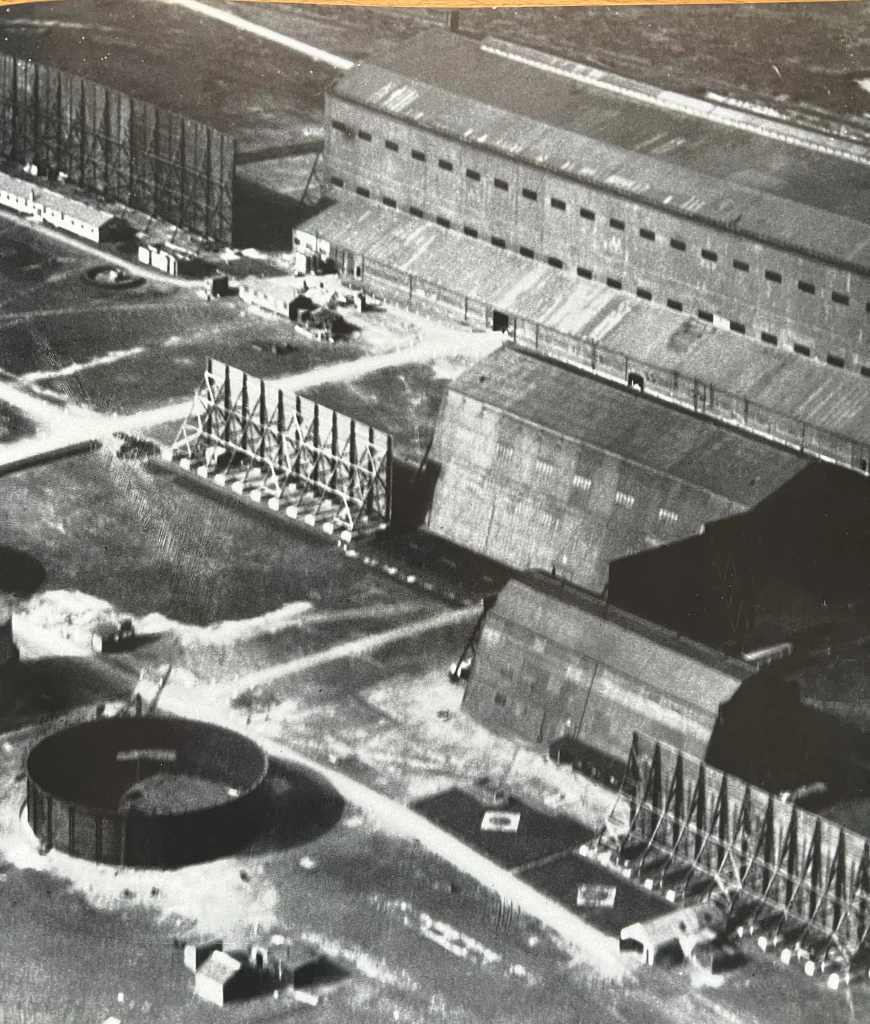
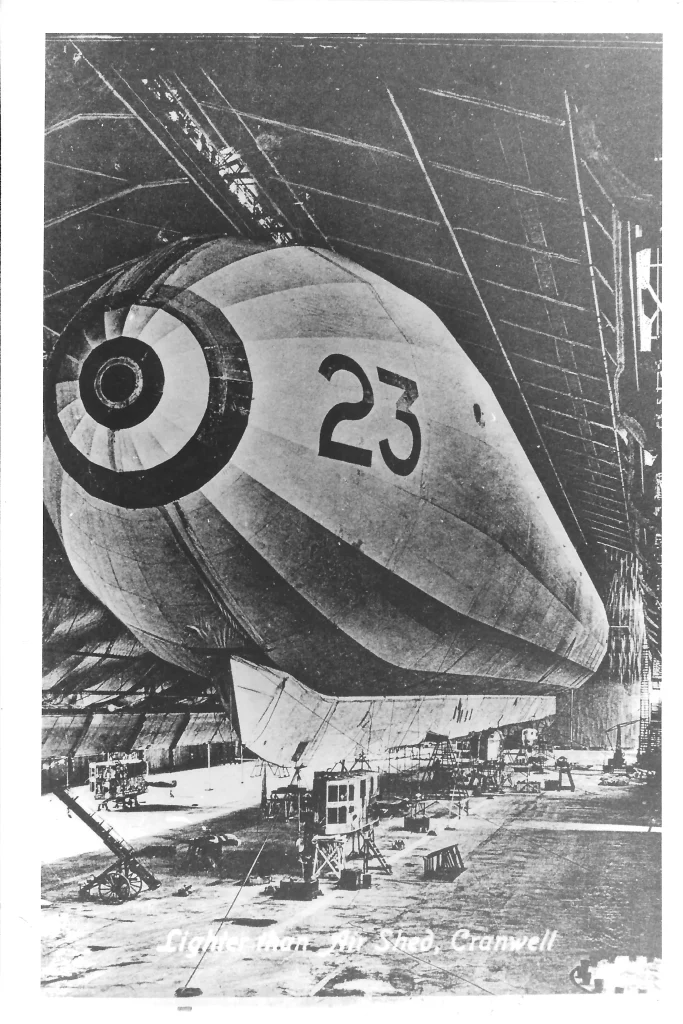
The original airship shed was completed in November. The shed was a portable Submarine Scout shed, which had to be rebuilt after being blown over in a gale. A Coastal shed was later built by airship shed contractor Sir William Arroll & Co, completed in December 1916. The third and last shed was the largest rigid shed to be completed, and this was constructed by Francis Morton and Co., using 1,915 tonnes of steel. The rigid shed was completed in June 1917.
A second shed was planned to be erected; however, this was cancelled in May 1917.
The first airship was delivered to RNAS Cranfield at the end of 1916; however, the first pupils didn’t arrive until May 1917. The training of pilots ran for nine weeks; however, it was often longer as bad weather often hampered flying.
Training
Training covered many aspects of airship flying and operation, not just piloting and navigation, but also rigging, weather and seamanship.
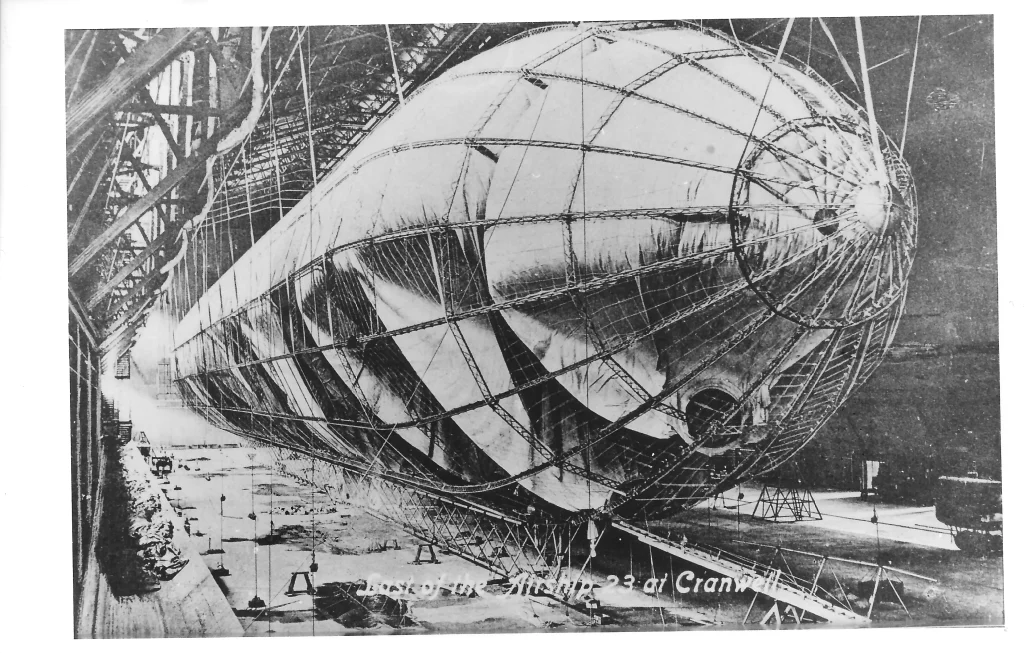
RNAS Cranwell was not an operational base but a training base, and so many of the flights from the base were short training flights. In the short time, just over a year by the time of the Armistice in November 1918, some seventy-five pilots had been trained. The RNAS Cranwell was renamed RAF Cranwell on 1st April 1918 when the RAF was created from the armed services.
Despite being assigned to the RAF, the RNAS aeroplanes and airships came under the newly formed authority; however, the actual airship station remained the property of the Admiralty.
Compared to other RNAS stations, when demobilisation occurred and the rapid contraction of the airship service in 1919, the last airship didn’t leave RAF Cranwell until 1921. The sheds and hydrogen plant were demolished over the next few years.
Today
Despite the loss of its lighter-than-air connection, RAF Cranwell remains a RAF Training College on the same aerodrome site as surveyed in November 1915.