
Ismailia was sited as the main location for the proposed airship base for its close connections to the Suez Canal, one of the world’s main trade and communication arteries. Considering that at the time, the Suez Canal was deemed the most important trade route from Europe to the East. The canal, even today, is one of the major trade routes of the world.
Location
Ismalia is positioned approximately halfway along the canal itself, a perfect connection point for the Imperial Airship Scheme.
The site was located for its suitability for level well well-drained ground and an area of some 600 acres. The location was deemed suitable in 1926 as part of the main Imperial Communications commission visit, and a mooring mast was erected along with a hydrogen gas plant for resupplying the airships.

Mast
Like the other masts, it was fitted with searchlights that would flash over the desert throughout the night as a navigational aid to the incoming airships. A new railway was planned to transport disembarked passengers to Cairo and Port Said. Unlike the other bases along the Imperial route, there were no plans to erect an airship shed. There was, however, a silcol hydrogen plant constructed, which could produce one million cubic feet of hydrogen per day. The total cost of the site was just over £93,000 (£5,127,565 today)
The mast itself was a copy of the Cardington mast, with no additional buildings erected around the base as with the Canadian and Indian mast sites. The base came under the command of an officer from the Royal Airship Works at Cardington, along with a number of RAF personnel. The employment of local Egyptians would have been made to assist in the mooring operations.
The September 1930 review saw the Egyptian base as the crucial part of proving the R100 and R101 to be a commercial success. It was agreed that the ships would operate a regular service as far as Ismailia to generate profits for a commercial service, and the Atlantic and Indian “runs” would be seen as more publicity flights but not commercially viable.
The R101 and R100 would operate this route in the winter months and then run the “publicity flights” to Canada in the summer when the North Atlantic was more appealing for airship flights. It was noted that the R102 and R103 would be the ships which would have the commercial range to service the further outposts of the airship scheme. The 1930 review also commented that commercial operations to Egypt would improve with the creation of the Maltese mast, and the current R101 and R100 would be able to carry more of a commercial load (passengers and freight) if they could offset the additional weight with less of a fuel range, and depend on the intermediate Malta stop to refuel.
In the original flight plan, the plan had been for Lord Thompson to hold a dinner party for the High Commissioner of Egypt in the evening, whilst the ship was moored to the mast. Provisions had been taken aboard for this evening’s lavish gala dinner, including two cases of Champagne. Alas, this party never was able to take place. The Ismailia mast was never used as the R 101 crashed en route to the Egyptian mast.
Construction Photos – Andrew Brown Collection
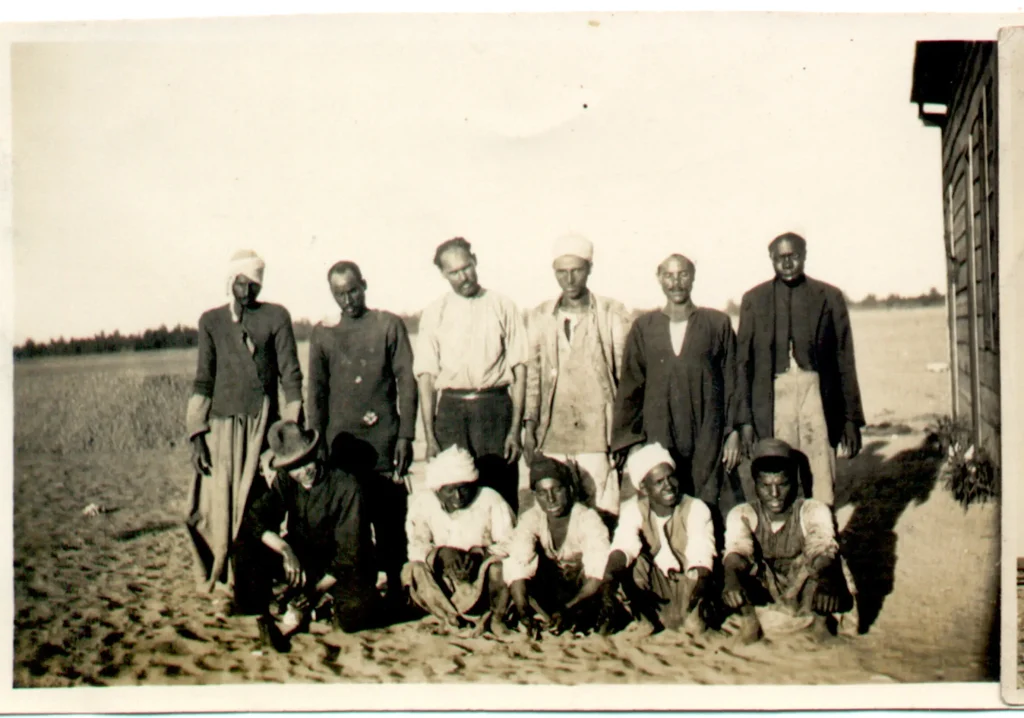
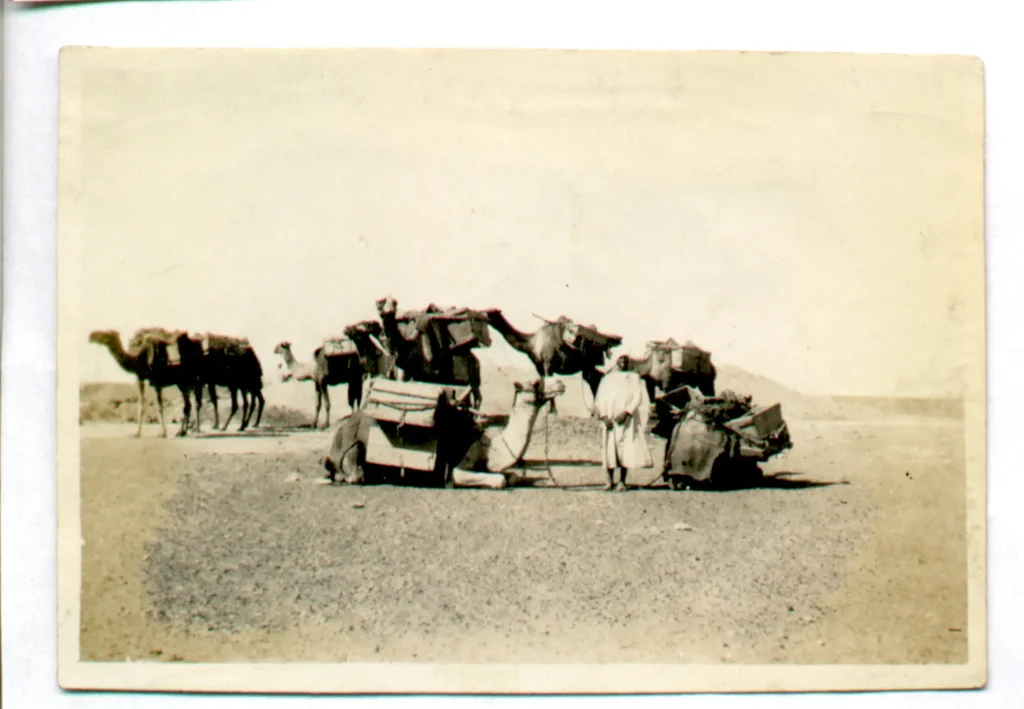
A series of photographs taken by the engineer responsible for the construction of the mast, Andrew Brown, and kindly allowed to be displayed by the Airship Heritage Trust, show the full construction of the Ismalia mast in 1926.
The series of photos is the property and copyright of the Harris family and is shown with their kind permission.
This fascinating series of pictures depicts the layout and construction of the ground works and foundations, followed by the erection of the winch shed and mast itself. The interesting pictures show the use of the local labour force employed to help with construction and transportation via camel.




Demolition of the Mast
The mast was still standing in 1939, but was then dismantled quite quickly compared to the Indian mast and shed site, with confirmed sightings of people based in the area that the mast was not there by the beginning of World War II, later in 1939/40.