
To protect convoys and cargoes from submarines in the western approaches of the English Channel, the opposite side from the Dover Straits and Thames Estuary, it was seen that an airship base located at the lower end of Cornwall would be required.
Location
The village of Mullion was chosen for its strategic position on the Lizard peninsula. Despite being the last airship station to be commissioned during the war, it saw more encounters with German submarines than most other bases.
Construction
Work commenced on the site in March of 1916, and if anyone knows the rural areas of Cornwall, there are many very single-track small lanes with very high-sided hedgerows. The delivery of the materials to the chosen site caused delays in the local area, much to the angst of the local residents.
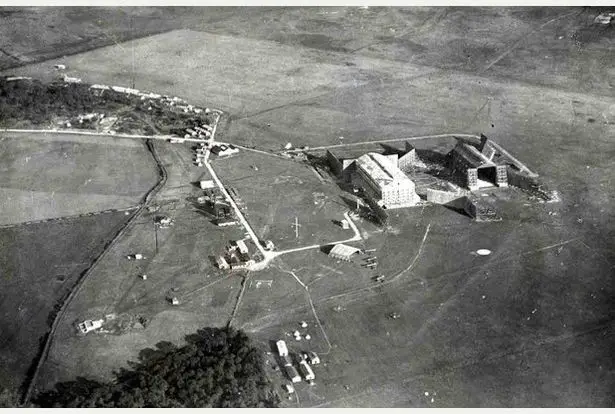
The contract to build the main sheds was awarded to A and J Main of Glasgow. Like all airship bases at the time, the layout of the sheds was always built on a south-west to north-east axis, so that the main door faced the direction of the prevailing wind.
This would generally make the moving of the ships from within the sheds easier to manage if they are moved out into the wind. Windbreaks were erected to stop gusts from other directions, and mooring blocks were set on the ground to help with walking the ships out of the sheds.
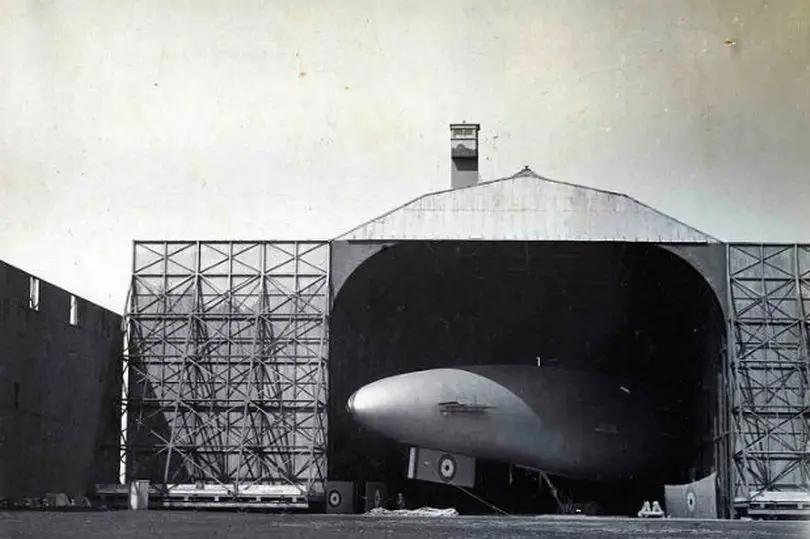
By the 1st week of June, the first shed was almost complete, the concrete floor being laid and dried, and the shed being painted. The first ship scheduled to arrive at Mullion was Coastal Class C.8; however, the ship crashed into the English Channel on 5th June 1916, on its voyage down to the site from RNAS Kingnorth, where it had been constructed. Its replacement, the C.9, was decided not to be flown down from RNAS Kingsnorth, but instead was packed up by rail and assembled in the Mullion shed when it arrived later that month on 19th June.

C.9 saw its first flight on 1st July 1916, and went on to make 13 more successful flights from RNAS Mullion over the next 3 weeks. An impressive flight log. Coastal C.10 later arrived, but like many newly commissioned sites, the ships arrived partly through the construction of the rest of the site.
The Silcol plant had not been made fully operational, and there was not enough gas to be shared between the ships, so and had to briefly rely on cylinder deliveries. The Silcol plant was operational a month later in July 1916. Many important convoy duties were carried out by the Mullion ships that summer, including protecting the ships coming in from Gibraltar.
The ships of the Mullion station had to patrol great expanses of open sea, and with some of the early single-engine Submarine Scout classes, which were often prone to break down. It was decided by a group of officers that a more reliable option was to install a second engine in the control car. To ensure there was enough lift for the extra weight, an enlarged envelope was used. A second “Hawk” engine was fitted to the rear of the control car, and the “Mullion Twin” was born.
The first ship, designated M.T.1, crashed during trials into the River Plym on 15 March 1918; however, the Admiralty were so impressed by its performance that they agreed that the new design should go into production, and the Submarine Scout Twin or SST class was born.
Dual Role
As with some of the other RNAS stations, Mullion took on a dual role, also housing aeroplanes in the latter part of the war. Five additional planes were attached to RNAS Mullion to help with the anti-submarine patrols. Initially, they were housed in the main airship shed, but later on, they were moved to a smaller temporary hangar next door to it.
Today
With the end of the war and the demobilisation of the troops, as with many other RNAS airship stations, the main hangars were auctioned off in mid-1919 1919 and a short time later, the dismantling of the station began. Today, a wind farm now occupies the site of the former RNAS station. It’s a reminder of the exposed nature of this site and the prevailing winds that the airship crews had to endure.